
About Quickshifters
Sport Touring Corner
By Norm Kern
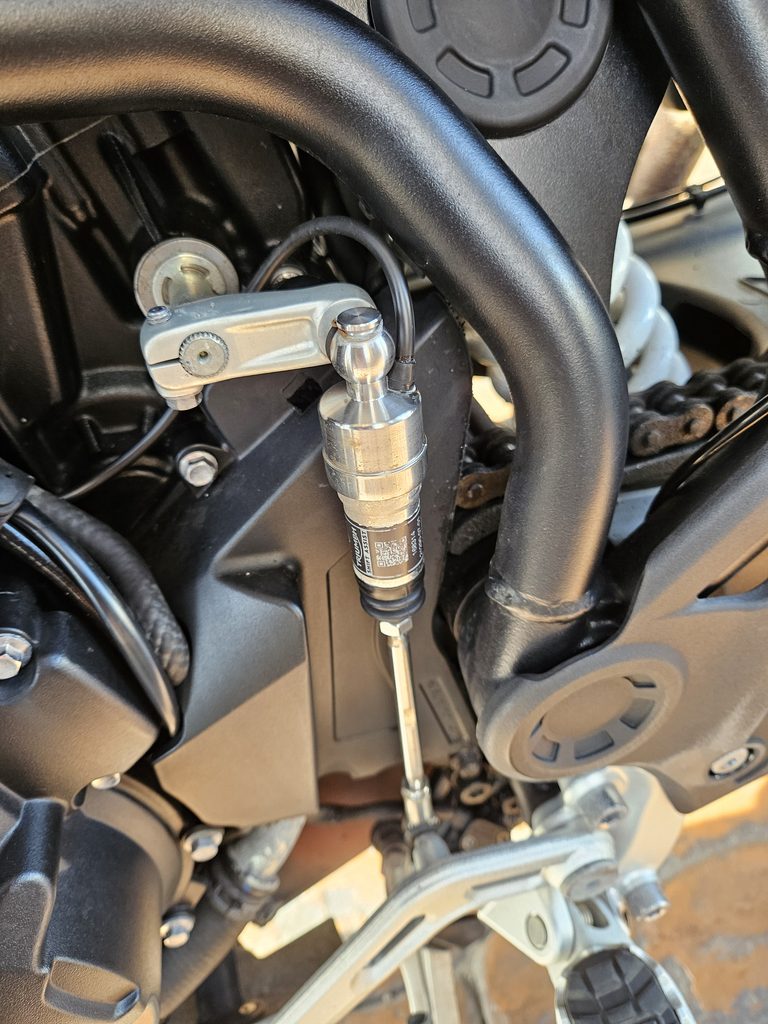
What is a Quickshifter?
Quickshifters use a strain gauge sensor in the gearshift lever linkage that detects force on the gearshift lever when shifting. The signal is used to momentarily reduce engine power and unload the drive train to enable shifting to the next higher gear without having to use the clutch.
I’ve owned over thirty motorcycles in the past 60 years, but had never ridden a motorcycle equipped with one until until 2024, when I purchased a Triumph Tiger 900 ADV Rally Pro. I’m not a racer and frankly it was not on my list of important of must-have features, but since the bike came with it, why not try it?
The first thing to know is that they are nothing like an automatic transmission. Since they do not control the clutch in any way, you must use the clutch when you start from or come to a stop. Because of the large change in gear ratio between first and second gear, it’s best to continue to use the clutch for both up and downshifts between first and second.
Sounds pretty limited until you experience the ease of shifting to higher gears without thinking about clutch or throttle. Being able to maintain your grip on the bars and concentrate on your line while smoothly shifting gears is safe and fun.
That’s all well and good, but what about downshifting? Making a Quickshifter that works for downshifts is much more complex. When you manually downshift using the clutch you must blip the throttle to increase engine RPM to match the lower gear for a smooth downshift. To do that with a Quickshifter, it must be able to control the throttle. This is difficult to do, especially with aftermarket Quickshifters on bikes that do not have electronic controlled throttles. Fortunately my Triumph has that feature and the OEM Quickshifter is fully integrated with the bike’s electronics.
How did it work for me?
My preferred riding style is a brisk pace on county roads with lots of corners and elevation changes. I ride at medium RPM- about 3500-6000, which gives me the ability to control my speed and cornering lines mostly with the throttle. I reduce throttle going into a corner, as slowing down while leaning tightens my line. Conversely, after reaching the apex and coming out of the corner, I roll on the throttle, increasing speed and straightening up the bike. This technique works best when you are in the right gear, and the Quickshifter enables effortless smooth shifts with matching engine RPM so shifting while cornering doesn’t upset balance or suspension.
Riding with the Quickshifter, I find myself shifting gears more often, riding smoother and a bit faster, only using the brakes for very sharp corners and downhill curves. Keeping engine revs in the mid range avoids lugging for longer engine life and less drive train wear.
OEM vs Aftermarket Pros & Cons-
OEM Quickshifters:
- Pros: Seamless integration, refined performance (especially on high-end bikes), strong reliability/warranty support, minimal risk of issues, no extra tuning needed.
- Cons: Less adjustable, may not work well with modifications (rearsets, gearing changes), unavailable or basic on many entry/mid-range bikes, higher upfront bike cost if optioned.
Aftermarket Quickshifters:
- Pros: Greater flexibility and tunability, works on a wider range of bikes (including older/modified ones), can outperform basic OEM in some cases, often more affordable way to add the feature.
- Cons: Potential for finicky behavior if not tuned properly (especially low RPM), more installation hassle, slightly higher risk of compatibility or wear issues if low-quality, may require separate warranty considerations.
Which Should You Choose?
- Go OEM if you’re buying a new performance-oriented bike (sportbike, supersport) where it’s available—it’s usually the smoothest, most worry-free option for street and occasional track use. Ideal for riders who want simplicity and don’t plan heavy modifications.
- Go Aftermarket if your bike doesn’t have one from the factory, you’ve already modified the bike (exhaust, rearsets, etc.), or you want customization and tuning. Reputable brands like Translogic (premium feel), HM (precise sensors), HealTech, Woolich, or Dynojet get strong user feedback for track-focused riding.
Many riders with both report that modern OEM bidirectional systems feel nearly perfect, while good aftermarket kits close the gap or exceed on tuneable aspects. Poorly set-up aftermarket units get the most complaints about harshness or low-speed issues. Ultimately, it depends on your bike, riding style (casual street vs. aggressive/track), budget, and willingness to tune/install. Check compatibility for your specific model, read recent owner reviews, and consider professional installation if you’re not mechanically inclined. A well-chosen Quickshifters (either type) adds a lot of fun without major drawbacks when used correctly. Always practice in a safe area and use the clutch for low-speed or 1st-2nd shifts.
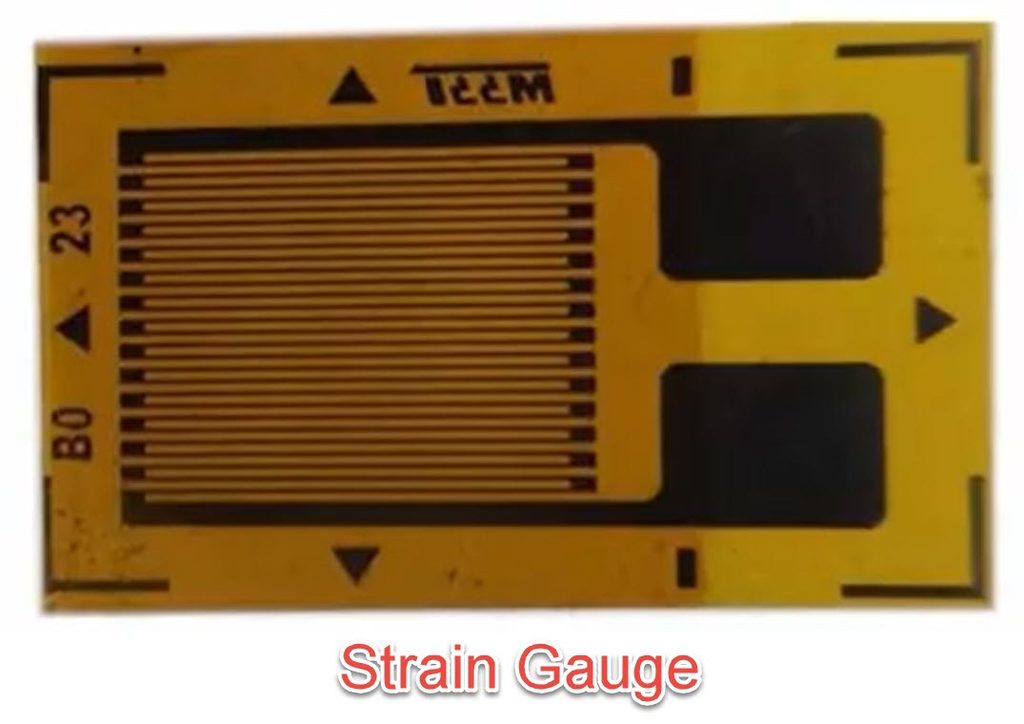
What is a strain gauge sensor and how does it work?
A strain gauge sensor works by converting mechanical deformation (strain) into a measurable change in electrical resistance. It typically consists of a thin metallic foil or wire arranged in a zigzag grid pattern, bonded securely to a flexible insulating backing that is attached to the surface of the object being tested. When the object experiences tension or compression, the gauge stretches or contracts along with it, altering the length and cross-sectional area of the conductor These dimensional changes cause a proportional variation in electrical resistance—usually very small (on the order of fractions of an ohm), but it’s enough to operate the other circuitry that controls ignition and throttle settings.
Read More of Our Magazines
Looking for more riding inspiration, tips, and event highlights? Explore our complete collection of past Reasons to Ride magazines in our Past Issue Bookshelf. Each issue is packed with valuable content for riders, including scenic routes, gear reviews, and updates from the motorcycle community.