The Group Ride
By ReasonsToRide
Riding Together: The Roles, Positions and Responsibilities of a Motorcycle Group Ride
There is something special about seeing a well-organized group of motorcycles traveling down the road together. Whether it’s 6 bikes or 60 – a group of riders presents a bold statement. When everyone understands the plan, maintains proper spacing and watches out for the riders around them, a group ride can be one of the best experiences motorcycling has to offer.
However, riding in a group requires more discipline than riding alone. Every rider must understand their position, responsibilities and limitations. A successful group ride is not about showing off or trying to keep up at all costs—it is about getting everyone to the destination safely.
Here is the guide in order to have The Best Group Ride!!
The Pre-Ride Meeting
Every organized ride should begin with a brief riders’ meeting. Even experienced riders benefit from reviewing the route and expectations.
The meeting should cover:
- The route and final destination
- Planned fuel, food and rest stops
- Road construction or known hazards
- Riding formation and spacing
- Hand signals
- Procedures for mechanical problems or emergencies
- Contact information for the ride leaders
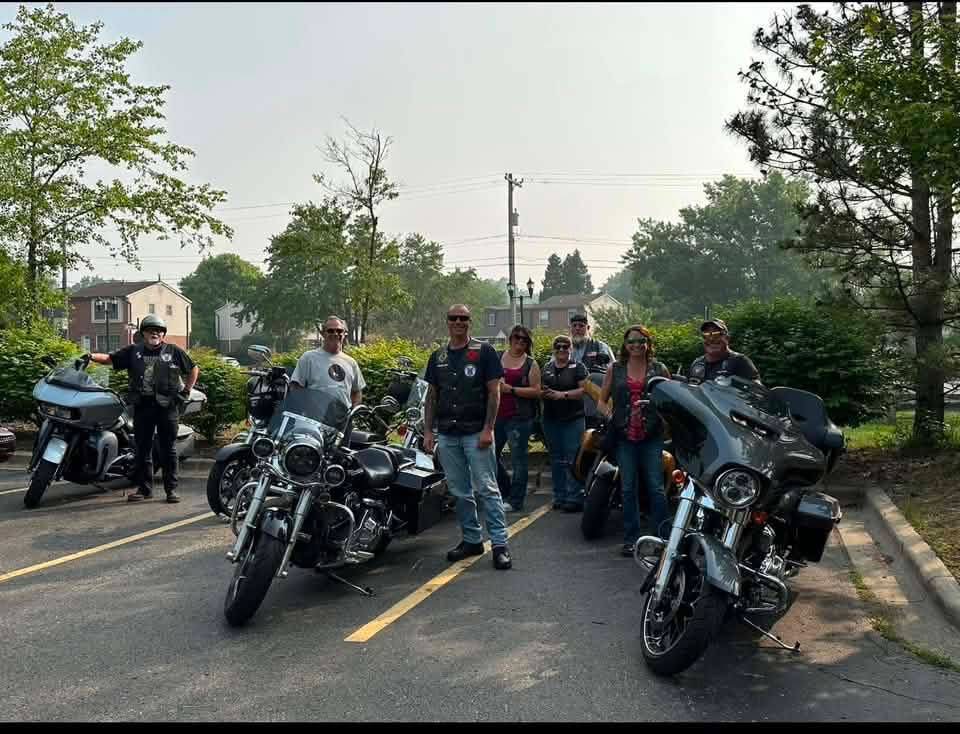
Every motorcycle should begin the ride fueled and mechanically ready. Riders should check their tires, lights, brakes and fluid levels before arriving. Showing up with an empty tank delays the entire group.
The Road Captain or Lead Rider
The Road Captain rides at the front and sets the tone for the entire group. This position should be filled by an experienced rider who is familiar with the route and comfortable making decisions.
The Road Captain’s responsibilities include:
- Leading the pre-ride meeting
- Setting a safe and consistent pace
- Watching for traffic, weather and road hazards
- Signaling turns, lane changes and stops
- Adjusting the group’s speed when conditions change
- Making sure the group remains organized without becoming tightly packed
A good Road Captain does not ride at the limit of their own ability. The pace should be appropriate for the least experienced riders in the group. Smooth acceleration, early signals and predictable movements are essential.
The Road Captain should never make a sudden turn or unsafe maneuver simply because a planned turn was missed. It is always better to continue safely and find another place to turn around.
The Front of the Group
Less-experienced riders are often placed near the front, directly behind the Road Captain and other experienced riders. This allows the leader to maintain an appropriate pace and prevents newer riders from feeling pressured to speed through corners or intersections to keep up.
New riders should not be placed directly behind aggressive or unpredictable riders. They need a smooth example to follow and enough space to make their own decisions.
Experienced riders positioned near the front can also help communicate signals and watch for riders who appear uncomfortable with the pace.
The Middle Riders
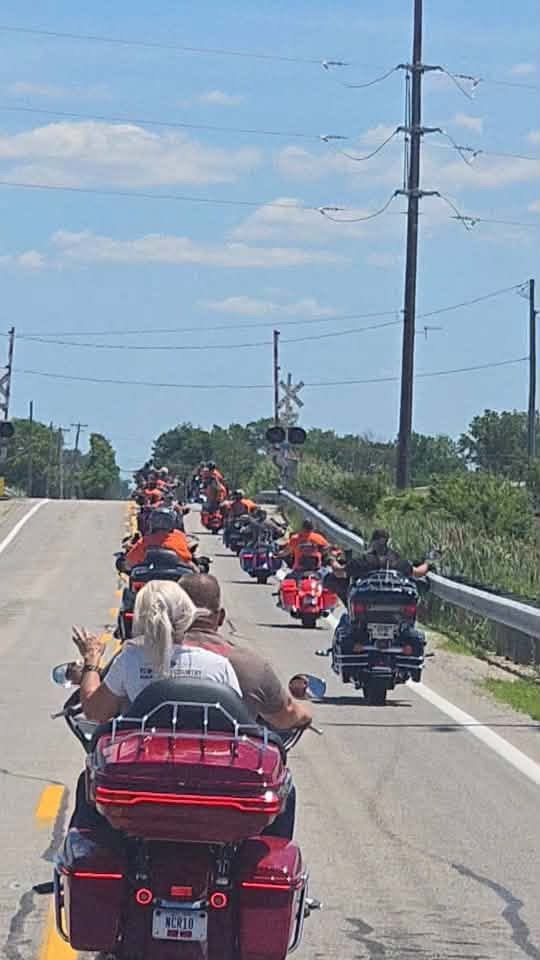
The center of the group contains most of the participating motorcycles. Riders in this section must maintain consistent spacing and pass signals from the front toward the rear.
Middle riders should avoid:
- Sudden acceleration or braking
- Frequently changing positions
- Riding directly beside another motorcycle
- Allowing large, unnecessary gaps to develop
- Fixating only on the motorcycle immediately ahead
Each rider should continually scan the road, mirrors and surrounding traffic. Do not blindly follow the rider ahead through an intersection, around a corner or into another lane. Every rider remains responsible for confirming that the movement is safe.
The Sweep or Tail Rider
The Sweep Rider—sometimes called the Tail Gunner—rides at the back of the group. Like the Road Captain, this should be an experienced and dependable rider.
The Sweep Rider’s responsibilities include:
- Watching the group from behind
- Helping riders who experience mechanical trouble
- Communicating problems to the Road Captain
- Making sure no rider is unintentionally left behind
- Observing traffic approaching from the rear
- Carrying basic tools, a first-aid kit or emergency supplies when possible
The Sweep Rider should have a reliable way to communicate with the Road Captain, whether by motorcycle communication system or established hand signals.
If a motorcycle stops because of a breakdown or emergency, the Sweep Rider may stop to assist. The rest of the group should continue to a safe location rather than stopping along the roadway and creating another hazard.
Staggered Formation
On straight roads with good visibility, motorcycles generally ride in a staggered formation. The Road Captain usually rides in the left portion of the lane. The next rider follows in the right portion, with the pattern continuing throughout the group.
A staggered formation provides each motorcycle with more visibility, reaction time and maneuvering space. As a general guideline, riders should maintain approximately a one-second interval from the motorcycle in the opposite track and at least two seconds from the motorcycle directly ahead in the same track. More space should be added at higher speeds or in poor conditions.
A staggered formation does not mean riding side by side. Riding directly beside another motorcycle reduces both riders’ escape routes.
When to Ride Single File
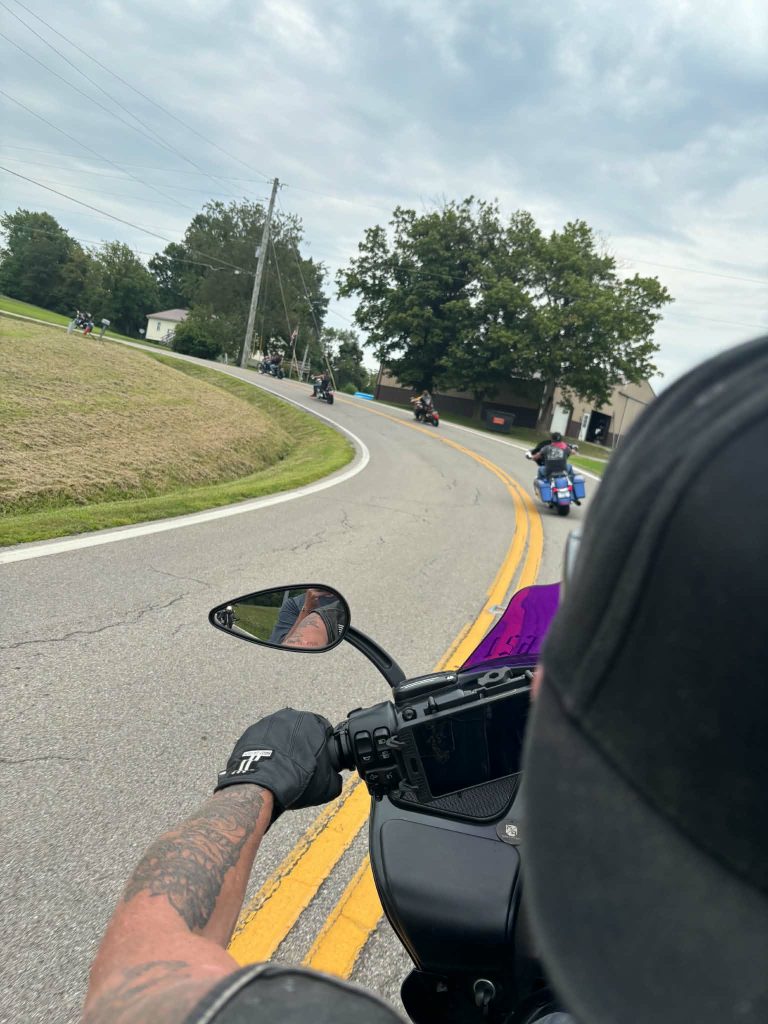
The group should move into a single-file formation when conditions require additional space or individual lane positioning. These situations may include:
- Curves and winding roads
- Construction zones
- Narrow roadways
- Bridges
- Poor pavement
- Limited visibility
- Heavy rain or strong winds
- Areas containing gravel, debris or standing water
When entering a curve, every rider should choose the safest lane position for that particular turn. Riders should never feel required to hold their staggered position through a corner.
Lane Changes and Passing
Lane changes should be gradual and clearly communicated. The Road Captain signals the move, and each rider changes lanes only after personally checking that the lane is clear.
No rider should assume that traffic will yield to the entire group. A lane may be open for the first few motorcycles but not for everyone behind them. If necessary, the group should separate and regroup later.
Passing should normally be completed one motorcycle at a time. After passing, the rider should continue far enough ahead to leave room for the next motorcycle. Group riders should never cross the centerline together or follow another rider into a pass without independently confirming that it is safe.
Intersections and Separated Groups
Motorists, traffic lights and stop signs will occasionally divide a group. When that happens, riders should remain calm. No one should run a red light, ignore a stop sign or make an unsafe pass to catch up.
The Road Captain should slow down or pull into a safe location when practical. Some groups use a “drop-and-sweep” system in which a rider waits at a turn until the Sweep Rider arrives. Whatever method is used should be explained before departure.
Riders should not attempt to block intersections unless the ride has properly authorized traffic control. Holding back traffic without legal authority can create a dangerous situation and may violate local laws.
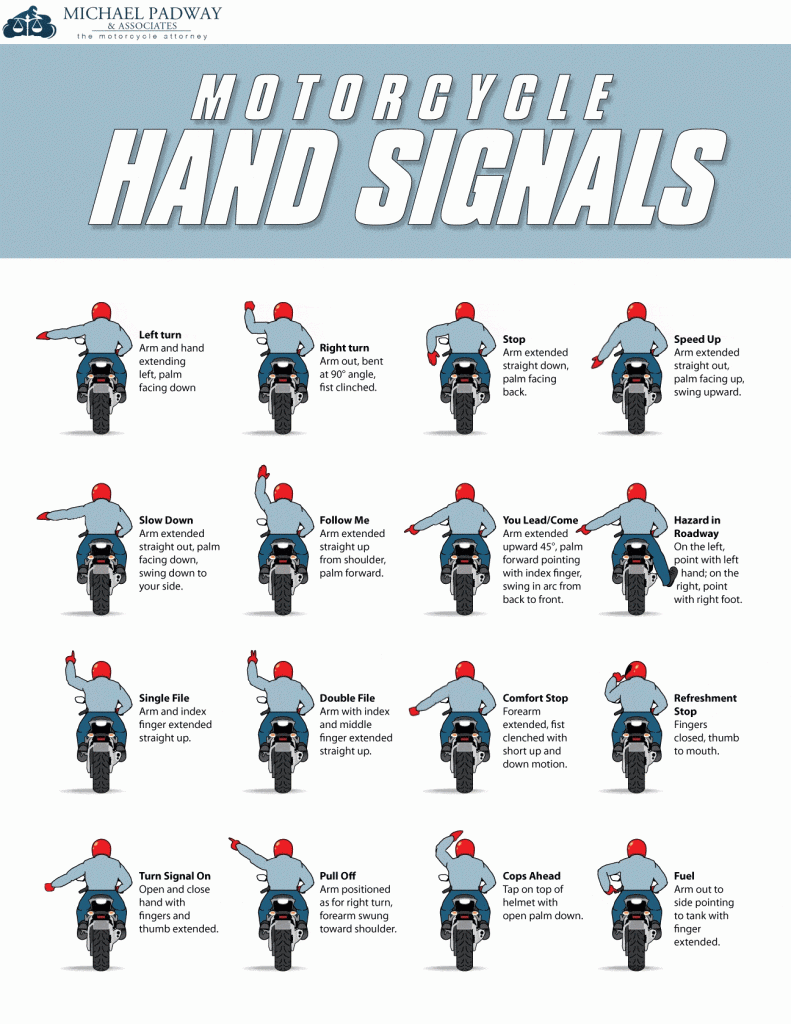
Hand Signals
Every rider should understand basic group-riding signals, including:
- Left and right turns
- Slowing down
- Single-file formation
- Staggered formation
- Road hazards
- Fuel or rest stops
- Following the leader
- Emergency pull-off
Signals should be passed toward the rear whenever it is safe to do so. Riders should keep both hands on the controls when road or traffic conditions require their full attention.
Ride Your Own Ride
The most important responsibility belongs to each individual rider. Never exceed your ability, comfort level or visibility to stay with the group. If the pace feels too fast, slow down and allow the Sweep Rider to assist.
Likewise, riders should never pressure someone else to ride faster, corner harder or make a questionable pass. Group riding is not a competition.
Every participant is responsible for operating a safe motorcycle, wearing appropriate protective gear, remaining sober and following traffic laws. A Road Captain can lead the ride, but no one can make safety decisions for another rider.
Arrive Together
A great group ride looks smooth because everyone is working together. The Road Captain leads, the Sweep Rider protects the rear, experienced riders assist where needed and every participant remains alert and predictable.
The objective is simple: enjoy the road, respect the riders around you and make sure everyone reaches the destination safely. The best group rides are not remembered for how fast they traveled, but for the miles, friendships and experiences shared along the way.
Now that you know how to do a Group Ride make sure you get your bikes ready and create your event! Don’t forget to submit your event ???? – https://reasonstoride.com/event-listing-packages/
Read More of Our Magazines
Looking for more riding inspiration, tips, and event highlights? Explore our complete collection of past Reasons to Ride magazines in our Past Issue Bookshelf. Each issue is packed with valuable content for riders, including scenic routes, gear reviews, and updates from the motorcycle community.